
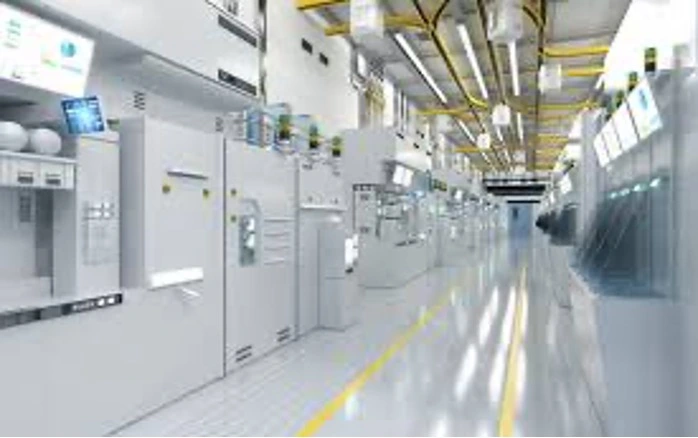
The B.Tech in Semiconductor Engineering stands as the pioneering and trendsetting program in the country. This program is crafted to proficiently respond to the rapidly evolving technology landscape and is strategically designed to nurture employability and entrepreneurship. To instill a sense of empathy, internships in rural, societal, and small industry settings are integrated into the curriculum. The teaching approach follows international standards, emphasizing research-led team teaching.
This 4 year academic programme at DYPIU for B. Tech Semiconductor Engineering entails a comprehensive study of semiconductor engineering principles, encompassing essential topics such as semiconductor materials, device physics, and fabrication technology. Students engage in courses covering analog and digital electronics, VLSI design, microelectronics, and semiconductor characterization. Practical application is emphasized through laboratory work, including hands-on experience with semiconductor fabrication tools.
The curriculum integrates interdisciplinary elements, connecting semiconductor engineering with related fields, and includes courses fostering research and innovation. Students are encouraged to undertake projects and internships, gaining exposure to industry practices. The program is designed to accommodate advancements in semiconductor technology, ensuring graduates are well-equipped for the dynamic and evolving semiconductor industry.
| Semester 1 | |
|---|---|
| Applied Computational Mathematics-I (Theory) | |
| Basic Electrical Engineering (Theory) | |
| Basic Electrical Engineering (Lab) | |
| Basic Electronics Engineering (Theory) | |
| Basic Electronics Engineering (Lab) | |
| Computational Thinking with Python Programming (Theory) | |
| Computational Thinking with Python Programming (Lab) | |
| Digital Fabrication Lab (Theory) | |
| Digital Fabrication Lab (Lab) | |
| Indian Knowledge System (Theory) | |
| Biology for Engineers (Theory) | |
| Semester 2 | |
|---|---|
| Applied Computational Mathematics-II (Theory) | |
| Semiconductor Physics (Theory) | |
| Semiconductor Physics (Lab) | |
| Digital Logic Design (Theory) | |
| Digital Logic Design (Lab) | |
| Analog Circuits (Theory) | |
| Analog Circuits (Lab) | |
| Communication Techniques (Theory) | |
| Communication Techniques (Lab) | |
| Soft Skill (Audit Course) (Lab) | |
| Electronics Measurement Techniques (Lab) | |
| Electronics Workshop (Lab) | |
| Simulation Tools for Electronics (Lab) | |
| Semester 3 | |
|---|---|
| Signals and Control System (Theory) | |
| Microcontrollers & Applications (Theory) | |
| Microcontrollers & Applications (Lab) | |
| Network Theory (Theory) | |
| Network Theory (Lab) | |
| Semiconductor Device Characterization (Theory) | |
| Semiconductor Device Characterization (Lab) | |
| Semiconductor Manufacturing Process-I (Theory) | |
| Semiconductor Manufacturing Process-I (Lab) | |
| Rural Internship (Lab) | |
| Professional Skill-I (Lab) | |
| Technology Management and Commercialization (Theory) | |
| Semester 4 | |
|---|---|
| Industrial Safety for the Semiconductor Industry (Theory) | |
| VLSI Design – I (Theory) | |
| VLSI Design – I (Lab) | |
| Semiconductor Manufacturing Process-II (Theory) | |
| Semiconductor Manufacturing Process-II (Lab) | |
| Environmental Studies / Climate / Sustainable Development (Theory) | |
| Analog IC Design (Theory) | |
| Analog IC Design (Lab) | |
| Foreign Language (Theory) | |
| Professional Skills - II (Lab) | |
| PLC Programming (Lab) | |
| Data Analytics (Lab) | |
| PCB Design and Manufacturing (Lab) | |
| Semester 5 | |
|---|---|
| Semiconductor Post Silicon Test & Validation (Theory) | |
| Semiconductor Post Silicon Test & Validation (Lab) | |
| VLSI Design – II (Theory) | |
| VLSI Design – II (Lab) | |
| VLSI Testing & Verification (Theory) | |
| VLSI Testing & Verification (Lab) | |
| Program Elective-I (Theory) | |
| Introduction to Semiconductor Packaging (Theory) | |
| Industry Internship (Lab) | |
| Open Elective (Lab) | |
| Professional Skills - III (Lab) | |
| Semester 6 | |
|---|---|
| Semiconductor Process Integration (Theory) | |
| Semiconductor Process Integration (Lab) | |
| Industrial Safety for the Semiconductor Industry (Theory) | |
| ASIC (Theory) | |
| ASIC (Lab) | |
| Program Elective – II (Theory) | |
| Program Elective – II (Lab) | |
| Program Elective – III (Theory) | |
| Design Project – I (Lab) | |
| Professional Skill-IV (Lab) | |
| Program Elective – I (Sem V) | |
| Introduction to Artificial Intelligence | |
| Wireless Sensor Network | |
| Program Elective – II | |
| Semiconductor Packaging Materials | |
| Data Science | |
| IoT System Architecture | |
| Program Elective – III | |
| Low Power Circuit Design | |
| Nanotechnology | |
| AI in Chip Design | |
| Open Elective | |
| Java Programming (P) | |
| Computer Networks (P) | |
| Exit Options to Qualify for Certification BVoc (After Completing 136 Credits) | |
| Embedded RTOS (Lab) | |
| IC Design (Simulation Tool) (Lab) | |
| Semester 7 | |
|---|---|
| Semiconductor Process Control (Theory) | |
| Semiconductor Process Control (Lab) | |
| System on Chip (Theory) | |
| System on Chip (Lab) | |
| Program Elective – IV (Theory) | |
| Program Elective – IV (Lab) | |
| Program Elective – V (Theory) | |
| Mastering the Art of Scholarly Writing (Lab) | |
| Research Internship (Lab) | |
| Program Elective – IV | |
| Fundamentals of Reliability and Testing of Packaged Devices | |
| Artificial Intelligence for SoC | |
| Industrial IoT | |
| Program Elective – V | |
| Fault Tolerant System | |
| Memory Technologies | |
| Semester 8 | |
|---|---|
| Project Stage II (Project at Industry) (Lab) | |
Passed 10+2 examination with Physics/ Mathematics/Chemistry/ Computer Science/ Electronics/ Information Technology/ Biology/ Informatics Practices/ Biotechnology/ Technical Vocational subject/ Agriculture/ Engineering Graphics/ Business Studies/Entrepreneurship. Obtained at least 45% marks (40% marks in case of candidates belonging to reserved category) in the above subjects taken together.
OR
Passed D.Voc. Stream in the same or allied sector
Students with good scores in MH-CET, JEE, PERA CET, CUET, or any other equivalent competitive exams, DYPIU Entrance Test and/or Personal Interaction
OR
OR
*Semester fees may change as per approval from Fee Fixation Committee
To encourage the merit in education at DYPIU, scholarships are planned for meritorious students of B. Tech Program Semiconductor Engineering
| Examination | JEE | % Scholarship as percentage of Tuition Fees | Category |
|---|---|---|---|
| Score range for Scholarship | All India Rank below 25000 (included) | 50% | A |
| All India Rank above 25000 below 60000 (included) | 25% | B | |
| All India Rank above 60000 below 150000 (included) | 15% | C |
| Examination | MH-CET/ 10+2 examination from any Board | % Scholarship as percentage of Tuition Fees | Category |
|---|---|---|---|
| Score range for Scholarship | 95 (included) and above | 50% | A |
| Between 90 (included) and 95 | 25% | B | |
| Between 85 (included) and 90 | 15% | C | |
| 75% in 10+2 examination | 10% | D |
- Number of scholarships in Category A: 05
- Number of scholarships in Category B: 05
- Number of scholarships in Category C: 10
- Number of scholarships in Category D: 10
Semiconductor Engineering involves the design, development, and fabrication of semiconductor devices and integrated circuits. It is a specialized field within electrical engineering that focuses on the study of semiconductors and their applications in electronic devices.
The curriculum typically includes subjects such as Semiconductor Physics, Digital Electronics, VLSI Design (Very Large Scale Integration), Analog Electronics, Microprocessor Systems, and Semiconductor Manufacturing Processes.
Graduates can pursue careers as semiconductor engineers, VLSI design engineers, research and development scientists, product engineers, and more. They can work in semiconductor manufacturing companies, electronics industries, and research organizations.
DYPIU offers internships and opportunities for industry exposure. This can include collaborative projects with semiconductor companies, internships during the summer break, and guest lectures by industry experts.
The duration is typically four years, consisting of eight semesters.
DYPIU provides research opportunities for undergraduate students. This could involve participating in research projects, working in labs, and collaborating with faculty members on ongoing research initiatives.
Strong analytical and problem-solving skills, a solid understanding of physics and mathematics, programming skills, and a keen interest in electronics are essential for success in semiconductor engineering.
Yes, many students opt for master's or doctoral programs in areas like VLSI Design, Microelectronics, or related fields to deepen their knowledge and enhance career opportunities.
Skills such as circuit design, programming (especially in languages like Verilog or VHDL), knowledge of semiconductor fabrication processes, and problem-solving abilities are crucial in this field.
Unique Features of B.Tech. Chemical engineering at DYPIU:
Students can complete internships within or outside of the university during their breaks from classes. To make it easier for them to attend classes and labs, students are encouraged to complete internships at the university during the semesters.
Throughout your Semiconductor Engineering study, becoming involved in a variety of extracurricular activities can improve your overall education, help you gain useful skills, and advance your career and personal development. Here are some extracurricular activities you may want to think about:
Semiconductor engineering graduates are hired by semiconductor manufacturers, electronics companies, research institutions, and technology firms. Companies like Intel, TSMC, Samsung, Qualcomm, and others are potential employers.
Yes, there is a consistent demand for skilled professionals in the semiconductor industry due to the ongoing advancements in technology and the widespread use of electronic devices.
Some programs provide research opportunities for students to work on projects related to semiconductor materials, devices, and processes. This can be an excellent way to gain deeper insights into the field.
Many B.Tech programs in semiconductor engineering offer opportunities for internships or co-op programs with industry partners. These experiences provide hands-on exposure to real-world applications and enhance job readiness.
Internship Offered:
Internship Offered:















| Program Outcomes | |
|---|---|
| POs | Program Outcomes |
| PO1. Engineering knowledge | Apply the knowledge of mathematics, natural sciences, engineering fundamentals, and an engineering specialization to develop solutions for complex engineering problems. |
| PO2. Problem analysis | Identify, formulate, review research literature, and analyze complex engineering problems using first principles of mathematics, natural sciences, and engineering sciences, while considering the holistic nature of the problem to reach substantiated conclusions. |
| PO3. Design/development of solutions | Design solutions for complex engineering problems and design system components or processes that meet specified needs with due consideration for public health and safety, as well as cultural, societal, environmental, and sustainability requirements. |
| PO4. Conduct investigations of complex problems | Conduct investigations using research-based knowledge and research methods, including the design of experiments, analysis and interpretation of data, and synthesis of information to provide valid conclusions. |
| PO5. Engineering tool usage | Create, select, and apply appropriate modern engineering, digital, and IT tools, including modelling, simulation, prediction, and data analysis techniques, to complex engineering activities with an understanding of their limitations. |
| PO6. The engineer and the world | Analyze and evaluate societal, environmental, sustainability, legal, cultural, health, safety, and contemporary issues, and understand the impact of engineering solutions on society and the world while fulfilling professional responsibilities. |
| PO7. Ethics | Apply ethical principles, professional responsibilities, engineering norms, and human values with respect for diversity, equity, inclusion, and sustainable professional practice. |
| PO8. Individual and collaborative team work | Function effectively as an individual, and as a member or leader in diverse, multidisciplinary, and collaborative teams to achieve common engineering goals. |
| PO9. Communication | Communicate effectively on complex engineering activities with the engineering community and society through effective reports, technical documentation, presentations, and clear oral and written communication. |
| PO10. Project management and finance | Apply engineering and management principles, financial practices, and project management techniques to individual and multidisciplinary engineering projects while working effectively as a member or leader of a team. |
| PO11. Life-long learning | Recognize the need for, and demonstrate the ability to engage in independent and lifelong learning to adapt to technological advancements, innovation, and evolving professional practices. |
| Program Educational Objectives (PEOs) | |
|---|---|
| PEOs | Program Educational Objectives |
| PEO1 | Graduates will possess strong technical skills and knowledge to design, develop, and analyse semiconductor devices and systems. |
| PEO2 | Graduates will apply innovation and research to address challenges in semiconductor technology and manufacturing. |
| PEO3 | Graduates will demonstrate professional ethics, effective communication, and teamwork in multidisciplinary environments. |
| PEO4 | Graduates will be prepared for lifelong learning and contribute to national initiatives like Make in India and Aatmanirbhar Bharat. |
| Program Specific Outcomes (PSOs) | |
|---|---|
| PSOs | Program Specific Outcomes |
| PSO1 | To design and analyze digital and analog circuits using modern tools and techniques. |
| PSO2 | To comprehend and uphold ethical standards and responsibilities in semiconductor engineering practice, considering societal impacts and environmental sustainability in manufacturing process. |
| PSO3 | To tackle global challenges through innovations in semiconductor assembly, testing, and fabrication expertise. |