
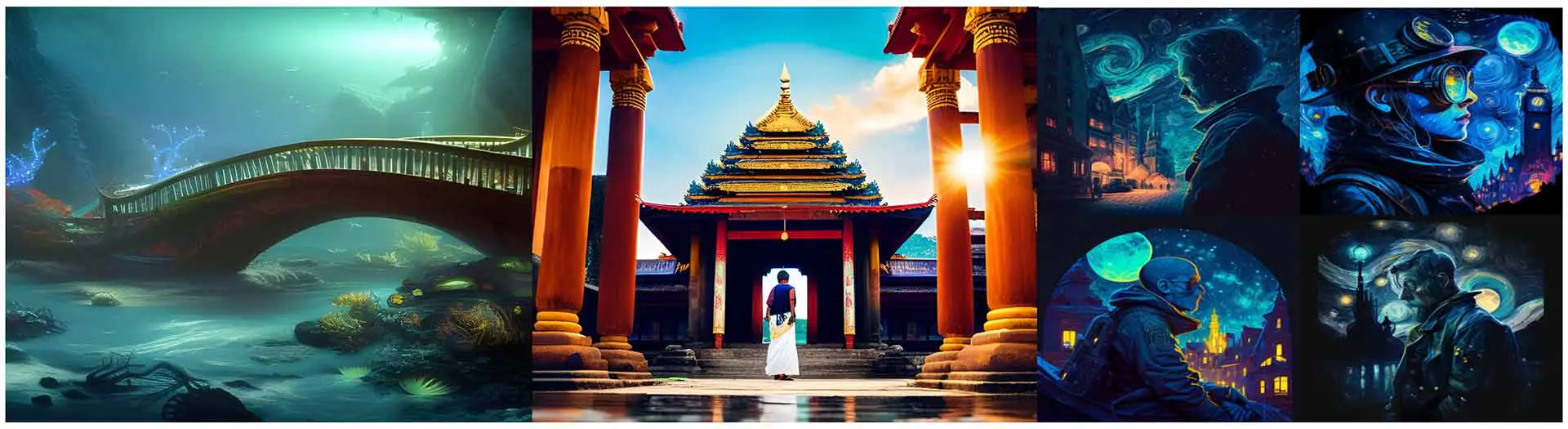
The Bachelor of Fine Arts (BFA) in Applied Art is a comprehensive and creative undergraduate program designed to function as an advanced educational platform for innovation, visual communication, and professional artistic development. This four-year program provides industry-oriented training aligned with global standards, preparing students for dynamic and evolving careers in applied art and design.
The curriculum emphasizes both conceptual thinking and practical skill development, enabling students to respond creatively and effectively to real-world design challenges. Alongside rigorous academic instruction, the program fosters essential non-academic growth, including self-confidence, motivation, aesthetic sensitivity, cultural awareness, emotional expression, and an appreciation of diversity and social harmony.
Graduates of the BFA Applied Art program are equipped to pursue successful careers across a wide range of fields such as advertising, visual communication, branding, illustration, education, museum and gallery practices, restoration work, media houses, and retail design. Many alumni also choose entrepreneurial paths, establishing independent studios, creative businesses, or working as freelance designers, artists, technicians, and craft professionals.
The program aims to nurture versatile, socially aware, and innovative designers who can contribute meaningfully to the creative industries while shaping a sustainable and fulfilling professional career.
Department of Bachelor of Fine Arts https://youtu.be/xVdeusQcez4?si=6qJMnEtNNfeaYgaS
The curriculum of the B.F.A. Applied Arts program is designed to be relevant to the needs of the industry as well as the society in both the local and global context. We adopt a holistic approach in our teaching by emphasizing on project work and providing industry exposure via internships, industry projects, as well as visits to companies, advertising and design houses as well as print and production units. Regular interactions with industry experts will help build a bridge between the students and the industry.
The B.F.A. Applied Arts program is a four-year full-time program with the first two years consisting of foundational courses as part of a common curriculum. After completing the first two years, students can opt to specialize in a track of their choice for the remaining two years.
| Semester-I | Credit |
|---|---|
| History of Art, Design & Technology - I | 2 |
| Theory of Visual Communications - I | 1 |
| Presentation Skills | 1 |
| Sketching & Drawing - I | 5 |
| Colour Theory & 2-D Design – 1 | 4 |
| 3-D Design | 2 |
| Semiotics, Semantics - I | 3 |
| Calligraphy & Typography – I | 2 |
| Total | 20 |
| Semester-II | Credit |
|---|---|
| History of Art, Design & Technology - II | 1 |
| Theory of Visual Communications – II | 2 |
| Fab - Lab | 2 |
| Digital Tools - 1 | 2 |
| Art Appreciation | 2 |
| Semiotics, Semantics - II | 2 |
| Fundamentals of Layout | 2 |
| Calligraphy & Typography – II | 2 |
| Introduction of Photography - I | 2 |
| Total | 17 |
| Semester-III | Credit |
|---|---|
| History of Global Art | 1 |
| Theory of Visual Communication - III | 2 |
| Printing Technology | 2 |
| Digital Tools - II | 2 |
| Soft Skill | 1 |
| Advanced Drawing Techniques | 3 |
| Typography | 2 |
| Visualisation | 2 |
| Brand Identity | 2 |
| Communication Design Strategy - I | 3 |
| Total | 20 |
| Semester-IV | Credit |
|---|---|
| History of Modern Art | 1 |
| Theory of Communication - II | 2 |
| Digital Tools - III | 2 |
| Cyber Security | 1 |
| Introduction to User Experience - I | 1 |
| Introduction to UI/UX | 2 |
| Illustration | 3 |
| Photography - II | 2 |
| Display Design | 2 |
| Communication Design Strategy - II | 3 |
| Total | 20 |
| Semester-V | Credit |
|---|---|
| Theory of Communication - V | 2 |
| User Experience Study - I | 2 |
| Soft Skill - II | 2 |
| Design for Brands & Motion Graphics | 3 |
| Design for Advertising | 3 |
| Design for Publication | 3 |
| Elective (Illustration, Photography, Typography, Visualisation, User Interface, Display Design) | 3 |
| Total | 18 |
| Semester-VI | Credit |
|---|---|
| Theory of Visual Communication - VI | 2 |
| Research Methodology | 2 |
| Digital Tools - II | 2 |
| Human Rights | 1 |
| Experimental Learning - Community Work | 2 |
| Experiential Learning - Outdoor Study | 2 |
| Graphic for Retail & Merchandising - I | 2 |
| Story Boarding & Visual Scripting | 3 |
| Elective (Illustration, Photography, Typography, Visualisation, User Interface, Display Design) | 4 |
| Total | 20 |
| Semester-VII | Credit |
|---|---|
| Theory of Communication Design - VII | 1 |
| Research & Design for Brands | 4 |
| Research for Campaign for Advertising | 4 |
| Graphic for Retail & Merchandising - II | 4 |
| Elective (Illustration, Photography, Typography, Visualisation, User Interface, Display Design) | 5 |
| Total | 18 |
| Semester-VIII | Credit |
|---|---|
| Dissertation | 4 |
| Indian Culture & Tradition Study (ICTS) | 1 |
| Internship | 15 |
| Total | 20 |
BFA Applied Art offers specialization in following domains
Students with good scores of any of valid NID-DAT, UCEED and any other equivalent competitive examination are eligible to apply, Personal Interview conducted by School of Design Faculty at DYPIU. The Candidate must present their Portfolio of Design works.
*Semester fees may change as per approval from Fee Fixation Committee
After the successful completion of B.F.A. Applied Arts program from DYPIU, students are offered jobs in diverse creative sectors such as:







YThe Bachelor of Fine Arts (BFA) in Applied Art is a four-year undergraduate degree program offered in accordance with UGC and affiliating university regulations. The program focuses on applied visual arts, design practices, and creative problem-solving for professional applications.
The program has a duration of four academic years (eight semesters), following the semester system prescribed by the university.
Candidates must have:
Passed 10+2 or equivalent examination from a recognized board, and Fulfilled minimum eligibility criteria as prescribed by the UGC, State Government, and affiliating University from time to time.
Yes. Admission is generally based on:
A University / Institution-level Entrance Test, and/or Portfolio assessment and personal interview, as per UGC and university admission norms.
To ensure a high-quality collaborative environment, tracks are conducted subject to a minimum enrollment threshold. If a track does not meet this number, students will be guided by faculty to choose their next best alternative.
Fill the application form available online at www.dypiu.ac.in and submit by paying Registration fees Rs. 1000/- (Non- Refundable).
A student seeking admission in any course of DYPIU, Akurdi, Pune needs to follow the process below:
1. Admission Letter will be issued with PRN No.
You may contact the admission section for special cases.
The details of documents will be available on the “Provisional Admission Mail” sent to you.
No.
Yes, we provide scholarships for meritorious students.
| S. No | Percentage of Refund | Point of Time |
|---|---|---|
| 1 | 100% | 15 days or more before the formally-notified last date of admission |
| 2 | 90% | Less than 15 days before the formally-notified last date of admission |
| 3 | 80% | 15 days or less after the formally-notified last date of admission |
| 4 | 50% | 30 days or less, but more than 15 days, after formally-notified last date of admission |
| 5 | 0% | More than 30 days after formally-notified last date of admission |
For cancellation of admission please mail to - cancellation@dypiu.ac.in
| Program Educational Objectives (PEOs) | |
|---|---|
| PEO-1 | Apply knowledge of design theories & practicals to solve business problems. |
| PEO-2 | Foster analytical & creative thinking abilities for data-based design. |
| PEO-3 | Ability to develop value-based leadership ability. |
| PEO-4 | Ability to understand & analyze global to local economic strategy with legal & ethical concepts of Communication Design. |
| PEO-5 | Ability to lead or work in a team as a member for achievement of organizational goals & contributing effectively to a team environment. |
| Program Specific Educational Objectives (PSEOs) | |
|---|---|
| PSEO-1 | Graduates of the BFA program will successfully integrate core, cross-functional and inter-disciplinary aspects of design theories, advertising and publication with the design practices to provide solutions to the business world as per policies and social issues of the client. |
| PSEO-2 | Graduates of the BFA program will possess excellent visual communication design skills, writing various copy platforms as per multidisciplinary media, working in multi-cultural teams and have an appreciation for local, domestic and global contexts to design bold, simplified & identifiable visuals. |
| PSEO-3 | Graduates of the BFA program will be appreciative of the significance of Indian philosophy and values in managerial design to exhibit value-oriented design. |
| PSEO-4 | Graduates of the BFA program will be ready to engage in successful career pursuits covering a broad spectrum of areas in corporate, government organizations, NGOs, entrepreneurial ventures and engage in lifelong learning. |
| PSEO-5 | Graduates of the BFA program will be recognized in their chosen fields for their design competence, creativity & innovation as well as integrity & sensitivity from local to global issues of social relevance. Earn trust & respect of others as inspiring, effective ethical leaders, managers, entrepreneurs & artists. |
| Program Outcomes (POs) | ||
|---|---|---|
| PO No. | Program Outcome (PO) | Description |
| PO 1 | Fine Art Knowledge | Apply the knowledge of Drawing, Sculpture, Art fundamentals and Design specialization to the solution of Complex Print & Digital Media Problems. |
| PO 2 | Problem Analysis | Identify, formulate, research literature and analyze design problems to arrive at substantiated conclusions using principles of Visual Design & Copy platform. |
| PO 3 | Design Development Solutions | Design solutions for Print & Digital Media problems and colour scheme according in fulfilling needs of client in legal way considering their customers profile / persona relating to cultural, societal, communistically and environmental variations. |
| PO 4 | Conduct Investigations of Complex Problems | Use research-based knowledge including experimental design composition by analysis and interpretation of data, then synthesis of information to provide valid conclusions. |
| PO 5 | Modern Tool Usage | Create, select and apply appropriate techniques, resources and modern digital, AI & VR tools by understanding their limitations. |
| PO 6 | The Designer and Society | Apply reasoning contextual knowledge received through research data to assess societal, traditional, legal, and cultural issues with consequent responsibilities relevant to the professional design practice. |
| PO 7 | Environment and Sustainability | Understand the impact of the professional design solutions in customers and environmental contexts to demonstrate the knowledge as per need for sustainable development. |
| PO 8 | Ethics | Apply ethical principles, commit to professional ethics and responsibilities as per norms of the design practices. |
| PO 9 | Individual and Team Work | Performance effectively as an individual as well as a member or leader in teams and multidisciplinary settings. |
| PO 10 | Communication | Communicate effectively with the visual artist community along with society at large. Be able to comprehend and write effective reports of documentation. Make effective presentations to give and receive clear instructions. |
| PO 11 | Project Management and Finance | Demonstrate knowledge and understanding of design as well as media management principles. Applying these mentioned qualities in one’s own art work as a member or team leader. Manage projects with multidisciplinary responsibilities. |
| PO 12 | Life Long Learning | Recognize the need and develop the ability to engage in independent as well as life-long learning in the broadest context of technological change. |
| Program Specific Outcomes (PSOs) | |
|---|---|
| PSO-1 | Entrepreneurship Development Activities. |
| PSO-2 | Research Guidance and Undertakings of responsibilities. |