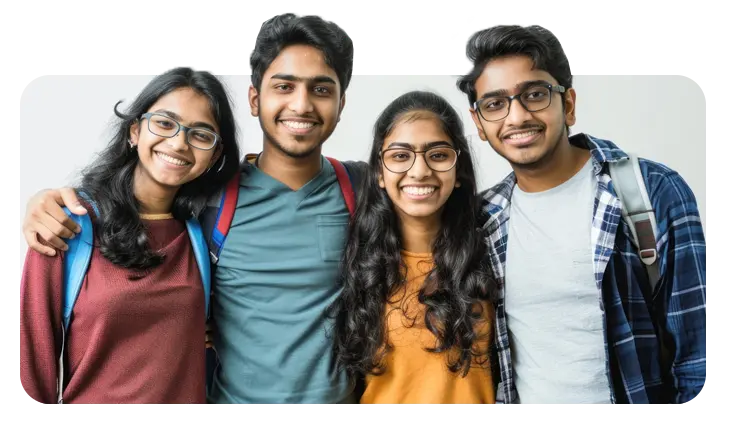
Welcome to the Bachelor of Technology in Mechanical Engineering program at D Y Patil International University, where innovation meets excellence. DYPIU offers a full-time, four-year B.Tech program in Mechanical Engineering with a specialized track in Smart Manufacturing. The curriculum has been developed through collaborative efforts with academic experts, industry professionals, and emerging start-ups to ensure relevance to modern technological advancements. Our program is carefully designed to provide a holistic and future-ready education, combining strong theoretical foundations with practical, hands-on learning experiences. This transformative journey prepares students to excel in the evolving field of mechanical engineering and advanced manufacturing technologies.
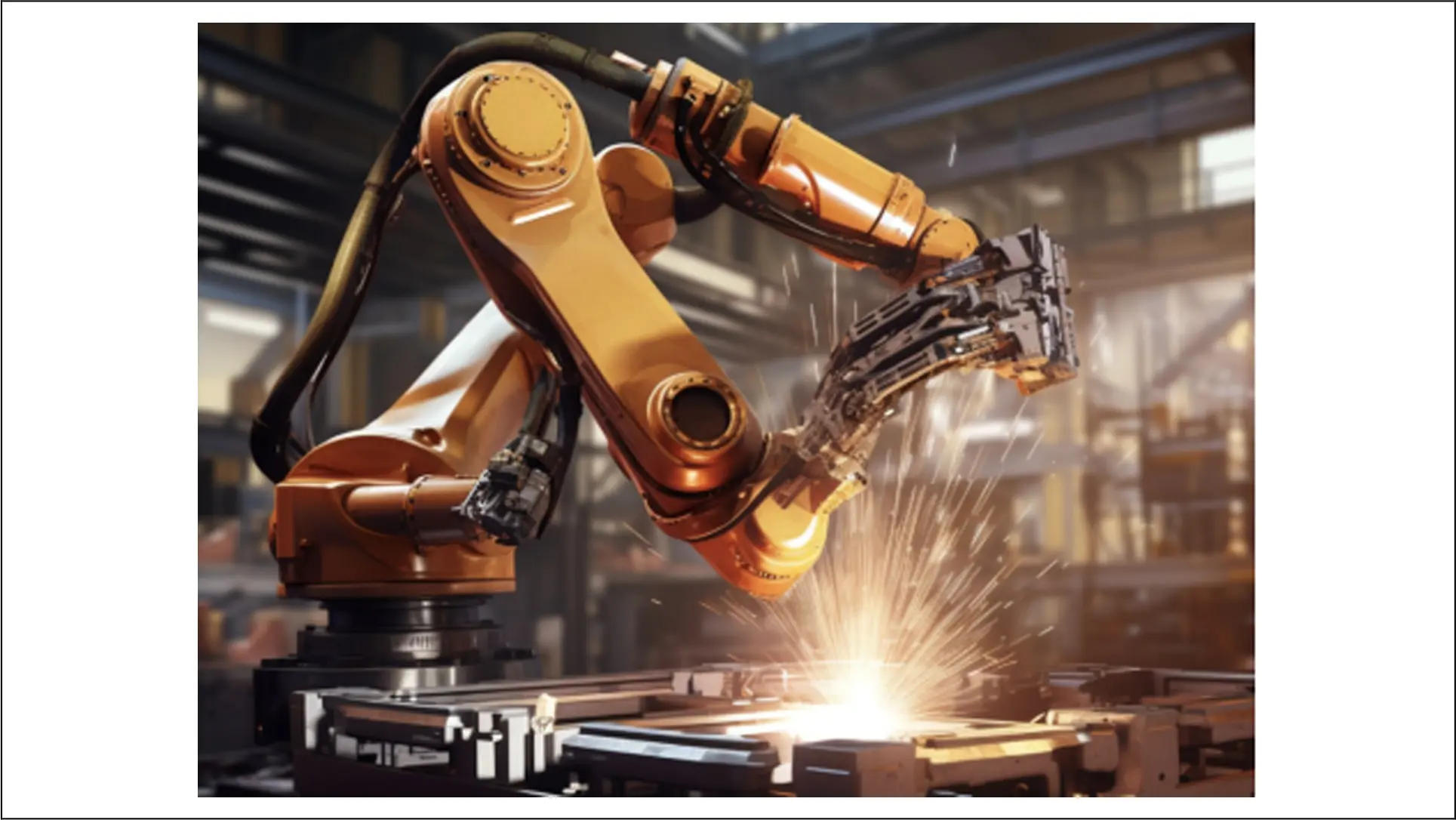
The emergence of Industry 4.0 is revolutionizing mechanical engineering. Technologies like machine learning (ML), artificial intelligence (AI) and big data are reshaping how engineers design and build new machinery. The shift from physical prototypes to computer-aided modelling accelerates the design process and enhances precision. The transition from combustion engines to battery-based systems is a game-changer.
The global trends in mechanical engineering that will take a peek into the future prospects for this dynamic field are focused in the curriculum as follows
Generative Design enables the rapid creation of multiple high performing design alternatives from a single idea in fraction of the time and cost.
Digital twin has emerged as one of the most active components in smart manufacturing. By creating a digital twin, manufacturers can simulate different scenarios and test various configurations without disrupting the actual production process.
Virtual Reality enables mechanical engineers to use virtual environments, allowing for realistic simulations and evaluations of product designs before physical prototypes are built. The integration of Augmented Reality and Virtual Reality is revolutionizing mechanical design and maintenance practices, empowering engineers with unprecedented capabilities to visualize, simulate, and optimize complex mechanical systems.
Most manufacturers today agree that digital is not limited to one or two functions but can apply to the entire business lifecycle: from concept and design, engineering, sourcing and procurement to supply chain logistics, warehousing, customer experience, strategic functions and governance. Digitalizing operations can increase efficiency, quality, safety and transparency, also reduce costs, timelines and errors.
Predictive maintenance lets you estimate time-to-failure of a machine. Knowing the predicted failure time helps you find the optimum time to schedule maintenance for your equipment.
Robotics and Autonomous Systems encompass diverse scientific and technical disciplines that focus on developing complex cognitive systems. These systems can operate independently, making decisions and performing tasks without direct human control.
Additive manufacturing uses data computer-aided-design (CAD) software or 3D object scanners to direct hardware to deposit material, layer upon layer, in precise geometric shapes. The terms "3D printing" and "rapid prototyping" are a subset of additive manufacturing.
| Semester 1 | |
|---|---|
| Elements of Mechanical Engineering (Theory) | |
| Engineering Graphics (Theory) | |
| Engineering Graphics (Lab) | |
| Design Thinking Laboratory (Fabrication Lab) (Theory) | |
| Design Thinking Laboratory (Fabrication Lab) (Lab) | |
| Engineering Physics (Theory) | |
| Engineering Physics (Lab) | |
| Computational Thinking with Python (Theory) | |
| Computational Thinking with Python (Lab) | |
| Engineering Mathematics (Theory) | |
| Indian Knowledge System (Theory) | |
| Semester II | |
|---|---|
| Manufacturing process and shop floor operation (Theory) | |
| Manufacturing process and shop floor operation (Lab) | |
| Applied Mathematics (Theory) | |
| Engineering Chemistry (Theory) | |
| Engineering Chemistry (Lab) | |
| Engineering Mechanics (Theory) | |
| Engineering Mechanics (Lab) | |
| Basics of Electrical and Electronics Engineering (Theory) | |
| Basics of Electrical and Electronics Engineering (Lab) | |
| Biology for Engineers (Theory) | |
| Semester III | |
|---|---|
| Thermodynamics (Theory) | |
| Thermodynamics (Lab) | |
| Computer Aided Design and Drawing (Theory) | |
| Computer Aided Design and Drawing (Lab) | |
| Metrology and Quality Systems (Theory) | |
| Metrology and Quality Systems (Lab) | |
| Solid Mechanics (Theory) | |
| Solid Mechanics (Lab) | |
| Technology Management & Commercialization (Theory) | |
| Professional Skill - I (Lab) | |
| Advanced Machine Shop (Lab) | |
| Environmental Science & Sustainable Development (Theory) | |
| Rural Development - Internship 1 | |
| Semester IV | |
|---|---|
| Engineering Materials and Metallurgy (Theory) | |
| Engineering Materials and Metallurgy (Lab) | |
| Energy Conversion (Theory) | |
| Energy Conversion (Lab) | |
| Fluid Machinery (Theory) | |
| Fluid Machinery (Lab) | |
| Data Science and Machine Learning (Theory) | |
| Data Science and Machine Learning (Lab) | |
| Kinematics of Mechanisms and Machine Elements (Theory) | |
| Kinematics of Mechanisms and Machine Elements (Lab) | |
| Skill Development (Lab) | |
| Professional Skill - II (Lab) | |
| Semester V | |
|---|---|
| Computational Techniques (Theory) | |
| Computational Techniques (Lab) | |
| Heat Transfer (Theory) | |
| Heat Transfer (Lab) | |
| Robotics and Automation (Theory) | |
| Robotics and Automation (Lab) | |
| Mechanical System Component Design (Theory) | |
| Mechanical System Component Design (Lab) | |
| Elective-I (Theory) | |
| Elective-I (Lab) | |
| Internship 2 | |
| Professional Skill - III (Lab) | |
| Semester VI | |
|---|---|
| Hydraulics and Pneumatics System (Theory) | |
| Hydraulics and Pneumatics System (Lab) | |
| Control Engineering (Theory) | |
| Control Engineering (Lab) | |
| Track (Subject 1) (Theory) | |
| Track (Subject 1) (Lab) | |
| Track (Subject 2) (Theory) | |
| Track (Subject 2) (Lab) | |
| Track (Subject 3) (Theory) | |
| Research Methodology (Theory) - Audit Course | |
| Internet of Things (Lab) | |
| Open Elective (Lab) | |
| Professional Skill - IV (Lab) | |
| Semester VII | |
|---|---|
| Track (Subject 4) (Theory) | |
| Track (Subject 4) (Lab) | |
| Track (Subject 5) (Theory) | |
| Engineering Estimation & Costing (Theory) | |
| Automobile Engineering (Theory) | |
| Automobile Engineering (Lab) | |
| Finite Element Analysis (Theory) | |
| Finite Element Analysis (Lab) | |
| Elective-II (Theory) | |
| Internship-3* | |
| Semester VIII | |
|---|---|
| Capstone Project | |
B.Tech Mechanical engineering students must choose a specialization track after the 4th semester. In the Smart Manufacturing track, students must complete 6 courses in sequence. Honors subjects are optional and students may choose based on their interests.
Track Core subjects, respective electives and Honors subject for Smart Manufacturing
| Track Subjects | Semester | Smart Manufacturing (Track Subjects) |
|---|---|---|
| Subject 1 | Sixth | Smart Materials |
| Subject 2 | Sixth | Machine Tool Design and Manufacturing |
| Subject 3 | Sixth | Product Design and Development |
| Subject 4 | Seventh | Additive Manufacturing |
| Subject 5 | Seventh | Industry 4.0 |
| Elective Subjects | Semester | (Elective Subjects*) | |
|---|---|---|---|
| Elective-I | Fifth | Smart Manufacturing | |
| a. Advanced Manufacturing Technology | |||
| b. Advanced CAD Simulation and Virtual Prototyping | |||
| Elective-II | Seventh | Industrial Engineering | |
| a. Supply Chain Management | |||
| b. Project Planning and Control | |||
| c. Ergonomics and Human Factors Engineering | |||
| d. Digital Twin | |||
* One elective subject to be selected from Elective-I and Elective-II
| Subjects | Honors Subjects** |
|---|---|
| 1 | Electrical Vehicles |
| a. Electric Vehicle Technology | |
| b. EV Powertrain Design | |
| c. Battery Systems and Management | |
| d. Electric Vehicle Dynamics | |
| 2 | Systems Applications and Products in Data Processing (SAP) |
| a. Introduction to SAP | |
| b. SAP Implementation Methodology | |
| c. SAP – Materials Management (Procurement) | |
| d. SAP – SCM Planning and Manufacturing |
Passed 10+2 examination with Physics, Chemistry, and Mathematics. Obtained at least 45% marks (40% marks in case of candidates belonging to reserved category) in the above subjects taken together.
Lateral Entry to Second Year for All Engineering Programs of SEMR
Passed minimum THREE years / TWO years (Lateral Entry) Diploma examination with at least 45% marks (40% marks in case of candidates belonging to reserved category) in ANY branch of Engineering and Technology.
OR
Passed B.Sc. Degree from a recognized University as defined by UGC, with at least 45% marks (40% marks in case of candidates belonging to reserved category) and passed 10+2 examination with Mathematics as a subject.
OR
Passed B.Voc / 3-year D.Voc. Stream in the same or allied sector.
Phy, Chem, Maths
Students with good scores in MH-CET, PERA CET, CUET, or any other equivalent competitive exams, DYPIU Entrance Test and/or Personal Interaction
Duration -3 years
(i) The Candidate should be an Indian National;
(ii)Passed minimum three years or two years (Lateral Entry) Diploma Course in Engineering and Technology with at least 45% marks (40% marks in case of Candidates of Backward Class categories, Economically Weaker Section and Persons with Disability category belonging to Maharashtra State) in any branch of Engineering and technology from an All India Council for Technical Education or Central or State Government approved Institution or its equivalent;
OR
(ii) Passed B.Sc. Degree from a University Grants. commission (UGC) or Association of Indian Universities recognized University with at least 45% marks (40% incase of candidates of Backward Class Categories, Economically Weaker Section and Persons with Disability category belonging to Maharashtra State) and passed HSC or its equivalent examination with Mathematics as a subject;
OR
(ii) Passed three years D.Voc. Stream in the same or allied sector
*Semester fees may change as per approval from Fee Fixation Committee
B. Tech in Mechanical Engineering is an undergraduate program that focuses on the principles of engineering, design, manufacturing, and maintenance of mechanical systems. It involves the study of various aspects like thermodynamics, fluid mechanics, materials science, manufacturing processes, and more.
In terms of curriculum and core subjects, there's usually no significant difference between a Bachelor of Technology (B.Tech) and a Bachelor of Engineering (BE) in Mechanical Engineering. Both degrees generally cover similar foundational concepts, including mechanics, thermodynamics, materials science, manufacturing processes, and design principles related to mechanical systems.
However, the difference often lies in the emphasis of the programs:
Completing a B.Tech in Mechanical Engineering opens up diverse career opportunities in domains including:
The versatility of this degree helps graduates adapt to evolving technologies and industries.
There are three prime focus areas of internships:
During the semester breaks, students can perform internships in or outside of the University. However, during the semesters, students are advised to do the internships in the University to ease their attendance in the class and labworks.
A successful career in Mechanical Engineering requires a combination of technical, analytical, and interpersonal skills. Some of the skills are listed below
A multi-track specialization system is a student centric approach introduced by DYPIU in 2019 (first for its B.Tech. Computer Science Engineering course). It allows students to choose a specialization of their interest at the end of the 4th semester. So, the students do not need to make the decision at the time of admission. This system makes sure that they exercise this option after getting a better understanding of various subjects. In each track, students get to learn 6-7 courses to get in-depth knowledge of their chosen specialization.
B.Tech. Mechanical at DYPIU is a four-year full-time course with multi-track specialization option in two emerging technologies. The track options are:
No, it is not the same. In the multi-track specialization system, all the track electives are specific to the track. For example, a student who chooses the Energy Engineering track can choose the electives offered only for that track. This system helps the students to specialize in a particular discipline and prevent non-specific choices.
All the students graduating under the program will be eligible to receive B.Tech. Mechanical Engineering degree. Their track names will be specified in their degree as well. For example, if a student specializes in Energy Engineering, s/he will get the following degree: B.Tech Mechanical Engineering (Energy Engineering).
The total intake for B.Tech Mechanical Engineering course is 120.
Participating in various extracurricular activities during your Mechanical Engineering program can enhance your overall learning experience, develop practical skills, and contribute to personal and professional growth. some extracurricular activities you might consider as follows:
Students must choose their tracks by the end of the 4th semester. The track courses begin from 5th semester onwards.
Student cannot select more than one specialization. The choice of specialization has to be made based on interests of the student developed during the first four semesters of course. In case, any student finds it difficult to choose a track, s/he can consult with his/her faculty mentors.
In case of a conflict, the track will be decided based on the CGPA of the student in the first four semesters of the course.
Under special circumstances, one can change the track before the end of the second week of the fifth semester provided the chosen new track has not reached its maximum strength. However, the University reserves its right to make the final decision for such cases.
A track of specialization would be offered only if a minimum number of students opt for it.
Placements are organized for every program being offered at DYPIU. All students qualify for cross-disciplinary placements as per the norms of the Placement Committee.
Mechanical engineering is a versatile field that spans across various sectors, encompassing the design, analysis, manufacturing, and maintenance of mechanical systems. Some of the top recruiters after B.Tech Mechanical Engineering are as follows:
| Force Motors | Godrej & Boyce |
| ElectroMech | Tata Technologies |
| ProdAIR | Faurecia |
| Schaeffler | Johnson Controls India (JCI) |
| Bosch | Worley |
| Deepak Fertilisers | Uno Minda |
| Spark Minda | GE Aviation |
| SANY | Polycab India |
| Praj Industries | KPIT |
| Infosys | Rieco |
| Sidel | LTI |
| Capgemini | Adient |
| TCS | Cognizant |
Yes, students can choose minors/electives from other programs. However, the choice of elective will be subject to availability during that semester.
































































To encourage the merit in education at DYPIU, scholarships are planned for meritorious students of B. Tech Program Mechanical Engineering
| Examination | JEE | % Scholarship as percentage of Tuition Fees | Category |
|---|---|---|---|
| Score range for Scholarship | All India Rank below 25000 (included) | 50% | A |
| All India Rank above 25000 below 60000 (included) | 25% | B | |
| All India Rank above 60000 below 150000 (included) | 15% | C |
| Examination | MH-CET/ 10+2 examination from any Board | % Scholarship as percentage of Tuition Fees | Category |
|---|---|---|---|
| Score range for Scholarship | 95 (included) and above | 50% | A |
| Between 90 (included) and 95 | 25% | B | |
| Between 85 (included) and 90 | 15% | C | |
| 75% in 10+2 examination | 10% | D |
- Number of scholarships in Category A: 05
- Number of scholarships in Category B: 05
- Number of scholarships in Category C: 10
- Number of scholarships in Category D: 10
| Program Outcomes | |
|---|---|
| POs | Program Outcomes |
| PO1 | Engineering knowledge Apply the knowledge of mathematics, natural sciences, engineering fundamentals, and an engineering specialization to develop solutions for complex engineering problems. |
| PO2 | Problem analysis Identify, formulate, review research literature, and analyze complex engineering problems using first principles of mathematics, natural sciences, and engineering sciences, while considering the holistic nature of the problem to reach substantiated conclusions. |
| PO3 | Design/development of solutions Design solutions for complex engineering problems and design system components or processes that meet specified needs with due consideration for public health and safety, as well as cultural, societal, environmental, and sustainability requirements. |
| PO4 | Conduct investigations of complex problems Conduct investigations using research-based knowledge and research methods, including the design of experiments, analysis and interpretation of data, and synthesis of information to provide valid conclusions. |
| PO5 | Engineering tool usage Create, select, and apply appropriate modern engineering, digital, and IT tools, including modelling, simulation, prediction, and data analysis techniques, to complex engineering activities with an understanding of their limitations. |
| PO6 | The engineer and the world Analyze and evaluate societal, environmental, sustainability, legal, cultural, health, safety, and contemporary issues, and understand the impact of engineering solutions on society and the world while fulfilling professional responsibilities. |
| PO7 | Ethics Apply ethical principles, professional responsibilities, engineering norms, and human values with respect for diversity, equity, inclusion, and sustainable professional practice. |
| PO8 | Individual and collaborative team work Function effectively as an individual, and as a member or leader in diverse, multidisciplinary, and collaborative teams to achieve common engineering goals. |
| PO9 | Communication Communicate effectively on complex engineering activities with the engineering community and society through effective reports, technical documentation, presentations, and clear oral and written communication. |
| PO10 | Project management and finance Apply engineering and management principles, financial practices, and project management techniques to individual and multidisciplinary engineering projects while working effectively as a member or leader of a team. |
| PO11 | Life-long learning Recognize the need for, and demonstrate the ability to engage in independent and lifelong learning to adapt to technological advancements, innovation, and evolving professional practices. |
| Program Educational Objectives (PEOs) | |
|---|---|
| PEOs | Program Educational Objectives |
| PEO1 | Graduates will design, analyses and develop engineering solutions that meet the needs of various industries. |
| PEO2 | Graduates will continue their education in engineering an interdisciplinary area to emerge as experts, educators, entrepreneurs and researchers in their chosen fields. |
| PEO3 | Graduates will work effectively as a part of teams on multidisciplinary projects. |
| PEO4 | Graduates will exhibit strong leadership, inter-personal and communication skills with concern for society and environment. |
| Program Specific Outcomes (PSOs) | |
|---|---|
| PSOs | Program Specific Outcomes |
| PSO1 | Identify, Analyze and Design the mechanical systems using mechanical engineering principals and multi-disciplinary approach by effective use of modern software. |
| PSO2 | Develop the approach to learn new concepts in emerging areas to become successful technocrats and entrepreneurs by applying technological and management skills. |